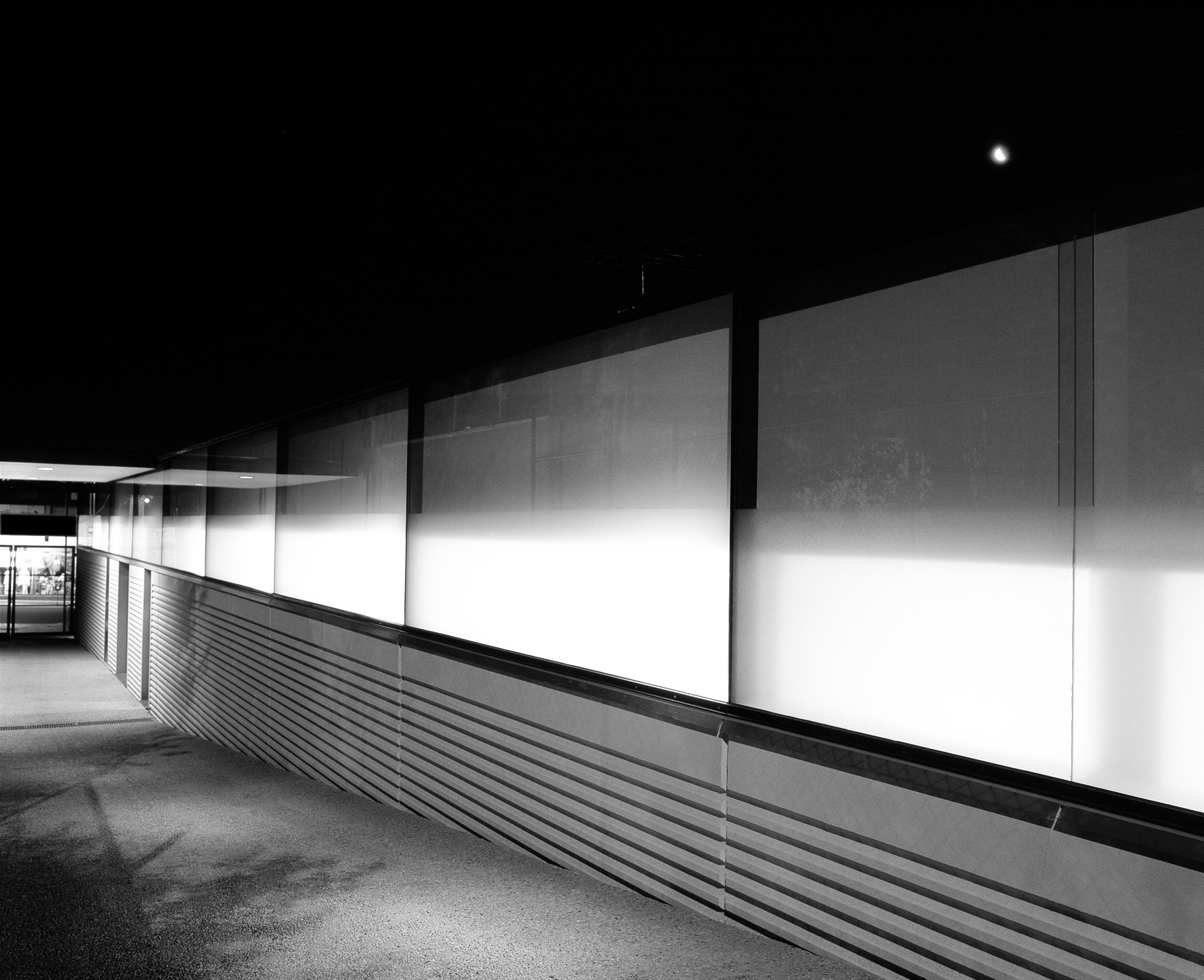
Langton Medical Centre
2001
Dandenong, VIC ∙ Bunurong Country
“In its clarity of construction and economy of means it resembles the small-scale, craft-oriented architecture coming out of Los Angeles and Florida in the 1940s and 1950s … The building demonstrates great refinement in the detailing of junctions between structure and surface and between different materials … The consulting rooms are intimate spaces naturally lit by diffused skylights or high windows without any of the clinical atmosphere of older medical institutions. This is a smooth machine befitting contemporary medical practice and easily adaptable for other corporate uses if the need arises in the future.”
Sandra Kaji-O’Grady, “Doctors’ Order,” Architectural Review Australia, no. 77 (2001): 82–3.
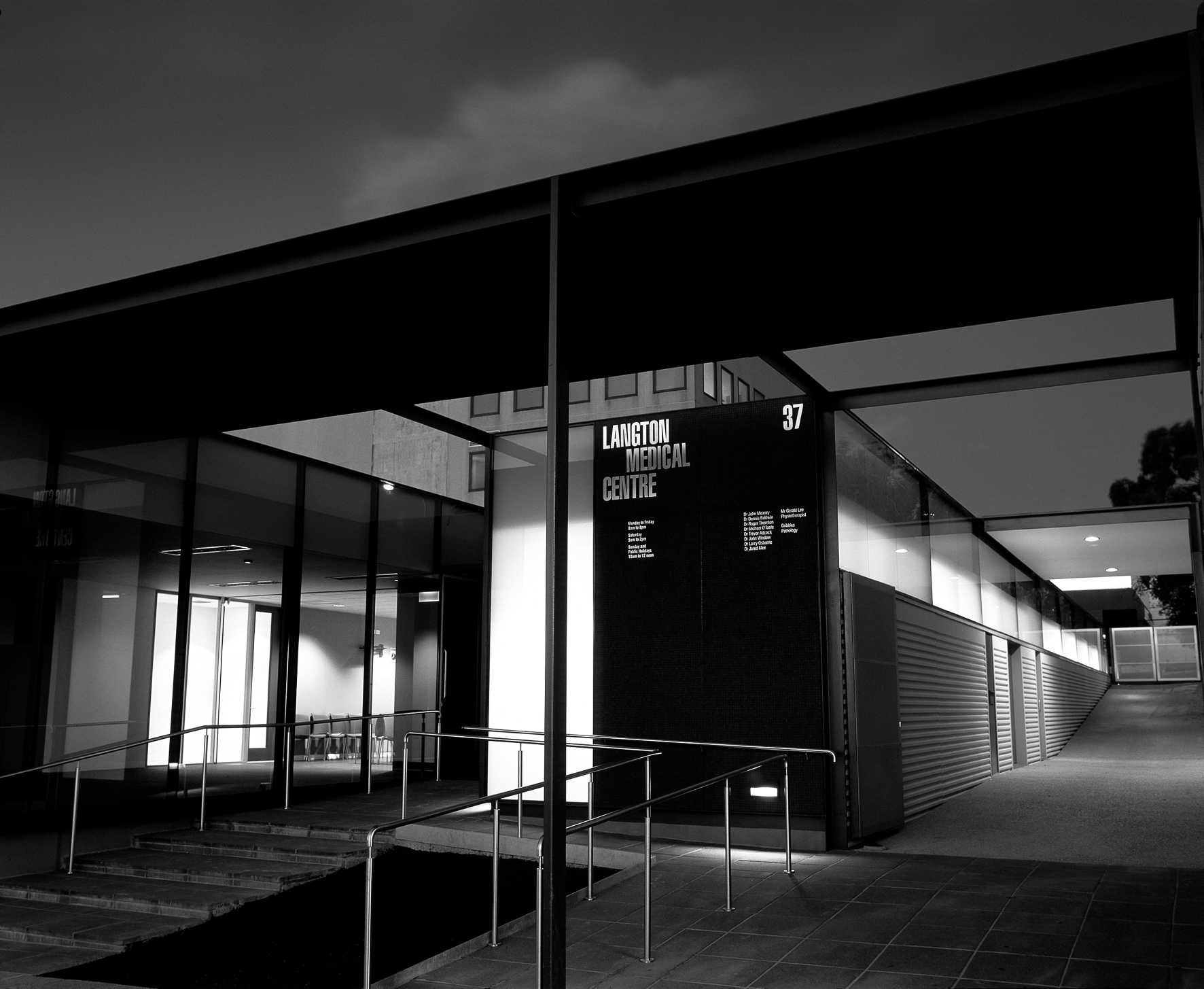
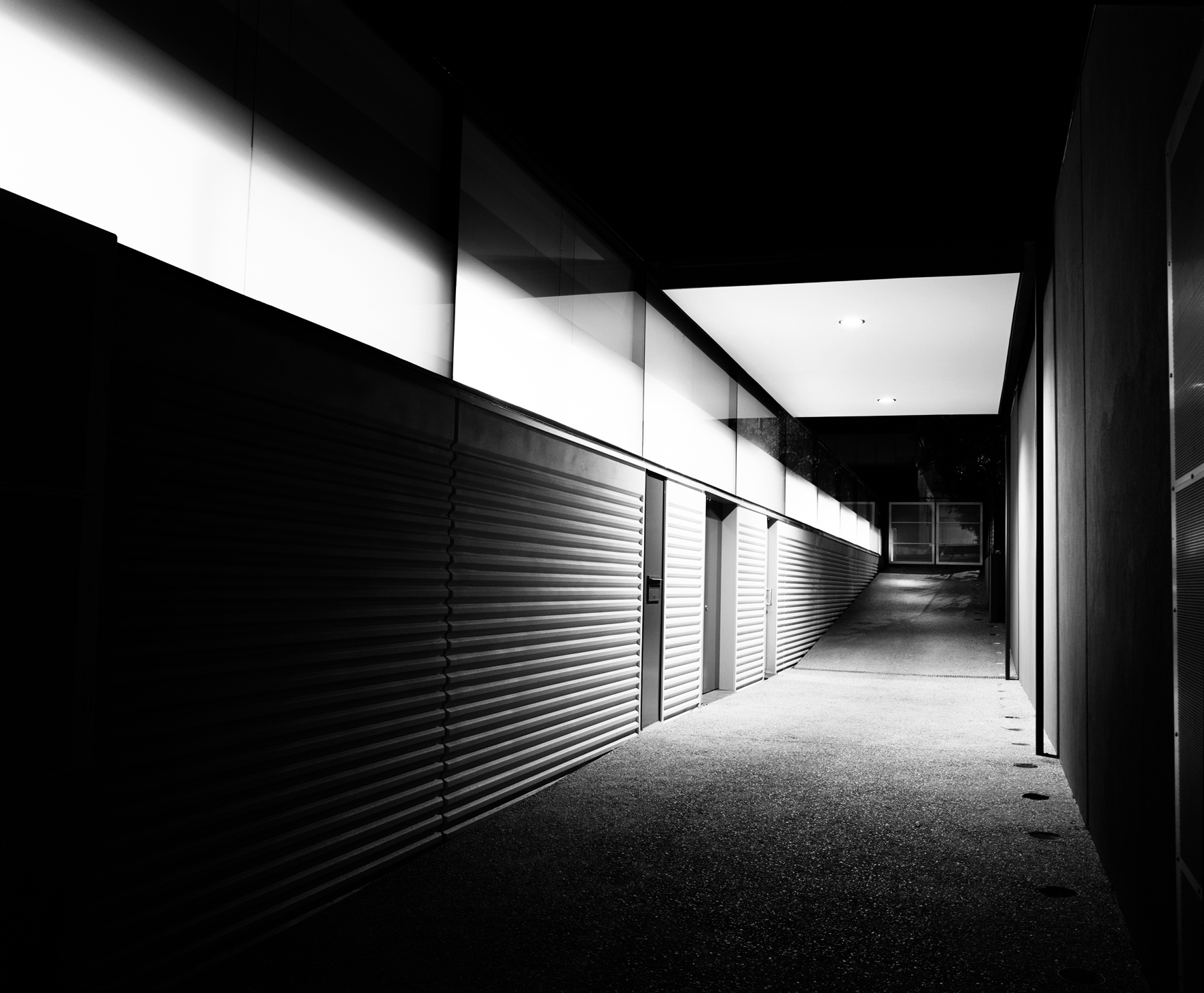
This project won a commendation in the ‘Commercial — New’ category at the 2001 AIA Victorian Architecture Awards. It was a new medical centre on a challenging site, which sloped three metres from rear to front. The brief was complex. We addressed it through careful iterations of the floor plan, which comprises three concentric rectangles. Inside out, it reads: core, circulation, periphery.
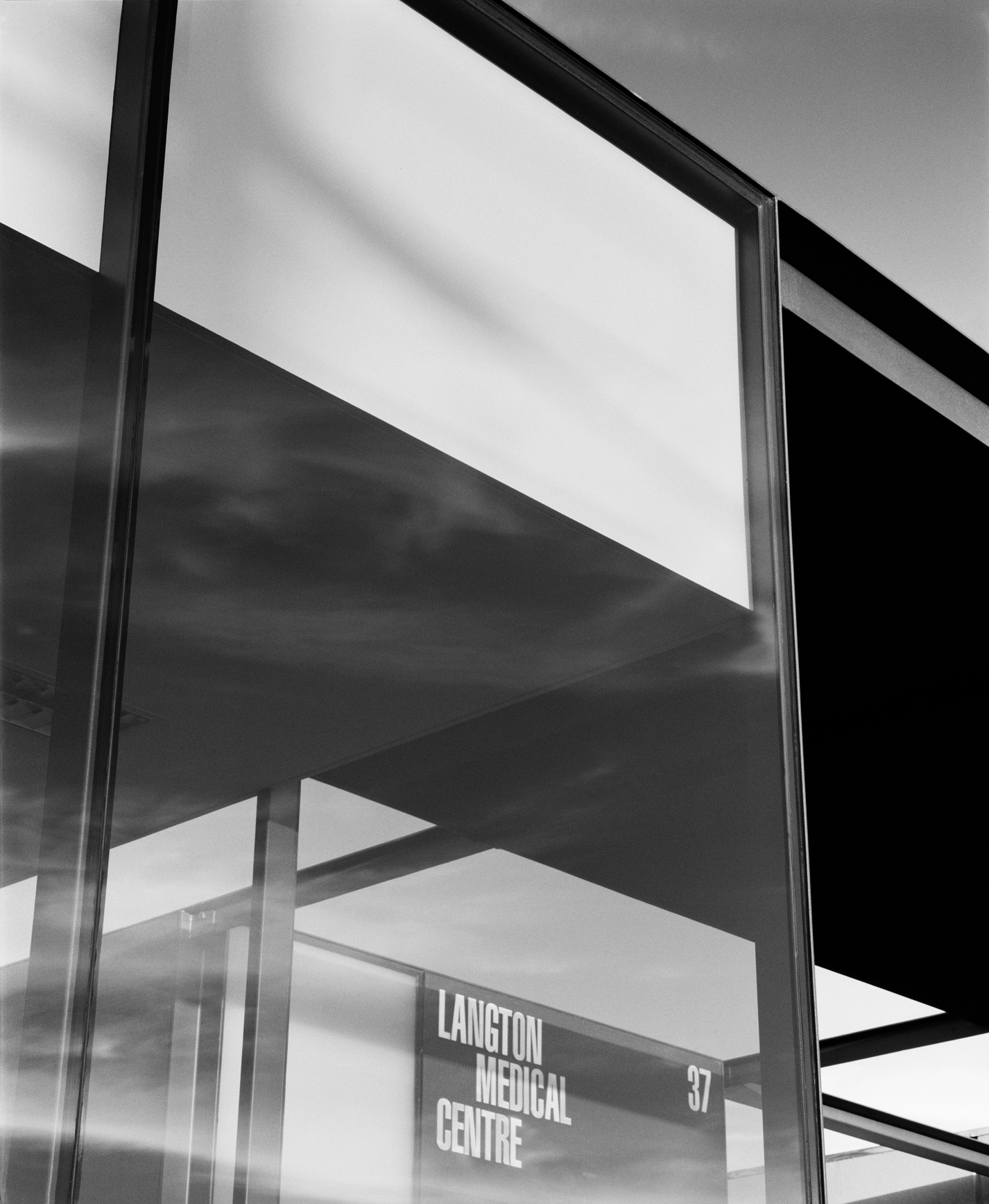
Belowground, buried into site at the building’s rear, lie an ambulance bay, a staff carpark, a kitchen, meeting rooms and stores. Aboveground, the building’s perimeter encloses a nurses’ station and triage room, public and private bathrooms, ten consulting rooms and a pharmacy. These spaces achieve privacy through adjacent positioning. Nonetheless, they are warm. They receive abundant, gentle light through skylights and full-height performance glazing, pressed into equal-angle frames. Finely detailed and solar-sensitive steel fenestration of this kind is an enduring part of our civic architectural strategy.
The building’s core is similarly sunlit. It comprises the reception and waiting area, as well as a room of records and servers, a manager’s office and a store. Circulation occurs along a half-rectangular corridor around this core.
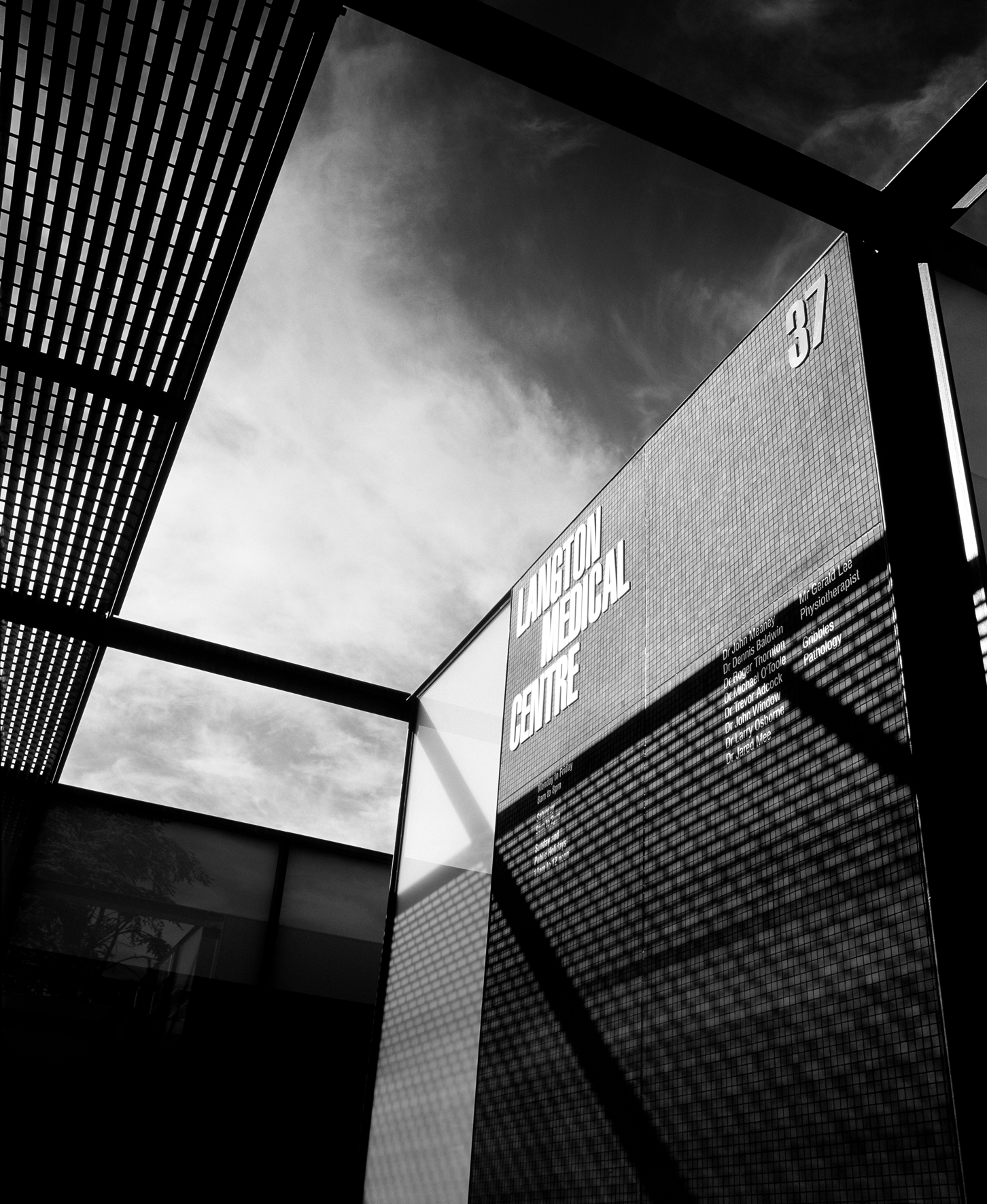
At street frontage, the building is accessed through a tiled and planted courtyard. This threshold is covered by a veranda, composed of steel columns, beams and louvres. We intended it to be a pedestrian-focused gesture framing the amenity and building form beyond, in line with our studies of various early modernist public buildings.